
Introduction
The Transatlantic Slave Trade was the biggest slave exchange in history. The trade brought many African slaves to many different places. When the Africans came to various places their background came with them. Their music that was really important to them, has been passed down for many years orally or on drums. The music went everywhere they went impacting the culture The culture impacted clothing, food, beliefs, and more. As the Transatlantic Slave Trade went on, African music styles started to move across the world, the clothing, food, beliefs, and rituals of the African culture evolved overtime into our modern culture.
The Transatlantic Slave Trade was a segment of the global slave trade. The slave trade sent over 12 Million Africans across the Atlantic ocean. The Africans ended up in places like the United States, Brazil, and Jamaica. Their culture that consisted of music, clothes, food, and music helped them get through the hard times of slavery. As time went on new cultures were being created. These used the traditional African culture roots to build culture. This evidence will show through that the when African people spread their culture spread too.
Music
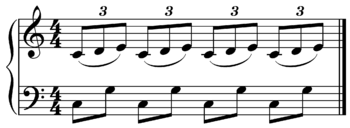
There are many similarities within the modern music and ancient African music over the years. The main theme these modern genres take from the African beats id the syncopation of the drum beats. Syncopation is a complex rhythm in music, so syncopation is not just a normal clapping beat you make off top of your head. You mainly find the complex rhythms in Jazz or Latin American music. Syncopation has been around basically since the dawn of music, but gained recognition from composers in the middle ages. When West African music and European-American music emerged, syncopation became a base beat for genres like Ragtime, Jazz, Blues, and Rock. African music also had polyrhythms with their syncopation. Polyrhythms are when two or more different rhythms play at the same time. European music also had polyrhythmic beats, but the rhythms used in music like Jazz are either African rhythms or something close to them. The call and response theme you get also comes from African drumming. Music like Afro-Cuban Jazz shows similar factors, but instead of combining two jazz beats you combine Cuban and African beats. The complex rhythms in our modern music did not just come from nowhere they came from early African roots.
The reception of African music and culture affected their lives in negative and positive ways. When African Americans played Spiritual, Jazz, or Blues music they were not taken as seriously. However, when White artists like Bob Dylan, Pete Seeger, and The Beatles started to make music in these genres, the genres became and more popular and listened to.Other music like Hip-hop was not even affordable for most of the African-American people so they got their songs illegally. This resulted with less income for the black artists who made the music, In more recent times too rappers seem really seem they are not using hip hop for the main purpose which is express social problems, and they just show off their money. One modern artist, 21 Savage, took offense to that. 21 Savage grew up in a rough place, and not with the greatest amount of money, so rapping was his way of making money and help feed his close ones. The early reception of music with these African music affected many people.

21 Savage 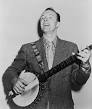
Pete Seeger
While the reception from the African-American were bad in the social and economic sense, their music inspired people within their communities. In the 1990’s rap was made to express racism and social problems in the U.S. and in the world. This impacted many lives in the African-American communities too. More people started to use rap as a way to speak their minds, and through their words the genre has become the number one genre in the world. Even in Africa when modern musicians started using modern styles of music in their songs, they were received badly at first. One Afro-pop artist named Wizkid said he tried to do a lot of rapping and mainstream western world music when he first started his career, but he never sold much. When he started using more African elements with the modern elements to his music he started to grow more in the western African region and is now one of the biggest artists in the Afro-Pop industry. The reception of the new types of music also took a toll on how African music impacted modern music.
Time was also a big part of the spread of African music. Time had a lot do with this topic because different time periods had different resources and other accessories for people to make music. Music like Afro-pop derives from Afrobeats. Afrobeats are made from traditional African beats and modern electric instrumentals. . In music like Rap, Jazz, and Blues they use many different instruments but use the same basic polyrhythms as traditional African music. Due to more electronic instruments and the evolution of technology, new instruments have been created with modern technology like, synthesizers, different frequency flutes, and bass synths. The dances in traditional African music has also evolved too. The dances, videos, and songs overall have changed in many ways. The dance moves are now more organized, the songs are more complex, and the culture around is different too. The time period the music has evolved was a key part to how modern cultures turned out now
African music played a big role in culture. Their music helped them in many ways. They used their music to get through hard times, or to express their emotions and beliefs. When they came as slaves they used their musical ways for worship. They also used their drums to communicate with their their others. They even used new resources to make new ways of music. The music of Africa was a big part of the lives of the native people, and when they began to spread the music impacted other people for future generations.
Culture
When music is created cultural traditions play a big role in the process. For example, Spiritual music in the times of slavery. This genre was made when the slaves came and carried their culture came with them. They were forced to convert to Christianity, and when the European and African cultures combined, the mix created Negro Spiritual. They used their combination of the two cultures to express their sorrow in music. Although this music started to die down after the Civil War, more Americanized genres were created and turned into music like Gospel. Even blues music was made from instrumentals that were created straight from Africa. The dances from the music also originate from the African culture. According to Cronkite news “If you look at dance styles across the history of the United States from what was called the Jitterbug or the Lindy Hop to all the way up to hip hop and things that are going on, the background coming from different African cultures is there.” African culture had an influence on our modern music as much as the music did.
Not just the cultural aspects and traditions played a big part in our modern music, but the concepts and beliefs played a big part too. African rhythm and beats were not just made they had meaning behind them. Certain types of music would be played at births, parties, weddings, and etc. This mainly had an impact on religious music. As said before, Spiritual music was made when they combined when Christianity and the African culture. Even modern African religious are made based off of the Traditional music back then. Music heard in a lot of Modern African events come from African drums. Music Like reggae was made from instruments like steel drums. Steel drums were made because the colonist banned the African slaves from using real drum beats to communicate, so they switched to steel plates. When you hear steel drums being played now you can get a sense of African drum beats if you have heard them before. One famous Nigerian artist, Fela Kuti, made a lot of music addressing social and economic problems. In one of his song titled “Water Have No Enemy” You can hear a jazz type vibe in the song, and when jazz started people were expressing their emotions and feelings, so you can see how the connection of expressing feelings is shared. The similarities used really stand out when you pay attention closely and you can get the sense of where they came from. The beliefs of African culture helped create many aspects of other culture.

The Evolution of the culture is also key to look at too. The traditional culture along with the cultures that have been influenced, have grown a long way. Many people from Africa still go across the world and try to live in new places. Typically when one person from a culture or tribe moves somewhere, people from that tribe tend to travel with too. Cultures like Ghanaian-American, Afro-Latino, and more combine to fuse one culture. The difference between those cultures and cultures like the African-American culture is that one of them has their own original aspects to themselves, and the other is just a mix of two cultures. Now in African are mainly based on Christianity or Islam so many biblical elements impacted lifestyle. And although people now may not practice the traditional religions they did back in ancient Africa, there are many stories are still passed on to teach morals or lessons.
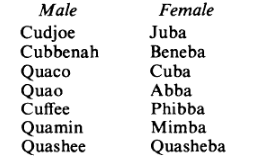
African Names given to slaves
The culture of the Africans was really important to them as they lived their daily lives. Their culture consisted of stuff like, food, currency, clothing, and music. Their ancient lifestyle was important to our modern lives too. The influence their culture had was huge all across the world. Over time their culture was evolving into different cultures. You can see how the traditions impacted their music and rituals, their beliefs impacted the space around them, and how the time impacted resources and the space around them and created new elements for culture. The evidence shows that the Ancient African ways impacted the modern lifestyle.
Geography
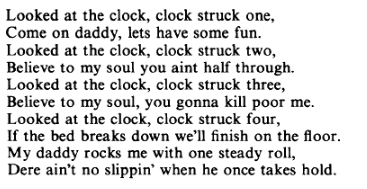
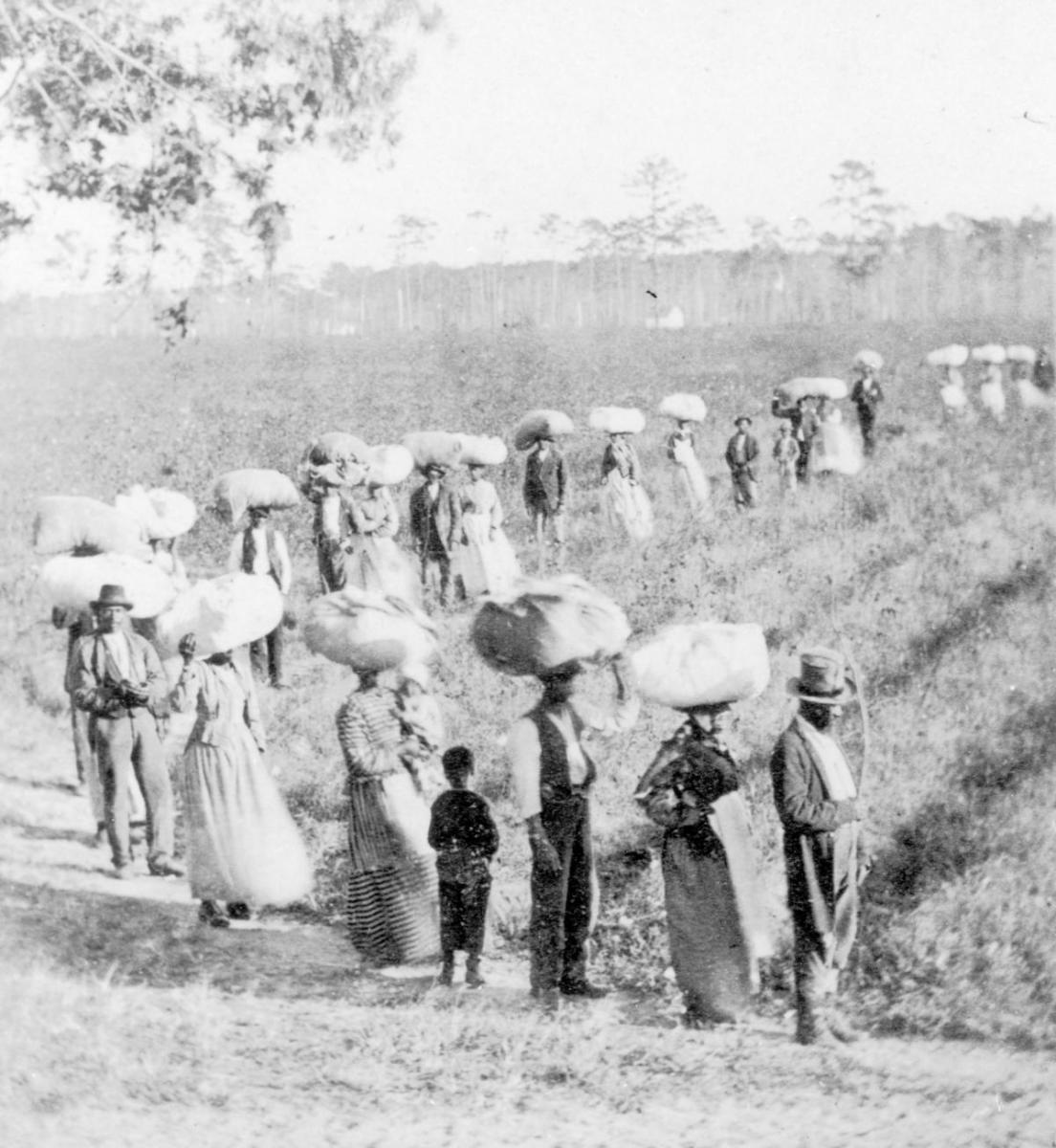
The Transatlantic slave trade was one of the biggest slave trades in history. That was the trade that took the slaves to the Americas. Cultures like Afro-Latino, Caribbean, or African American, Have a lot of African aspects to them. Jamaicans eat some foods like yams which are native African plants. Other foods like Plantains, orka, and pigeons peas are also African cuisines that the Jamaicans adopted. The same also goes for the Afro-Latinos with their similar Foods and beliefs as the Caribbean people. African American culture has a lot of major connections with traditional African culture. things from stories to music. Many slaves named their kids with African names like Cudjoe, Cubbenah, or Juba. Former slaves also relied their life on Proverbs from western African Cultures. Folklore music and lyrics came from the African Folklore. The spread of African Culture was one of the most important aspects of the creations of some western culture and all around the world.
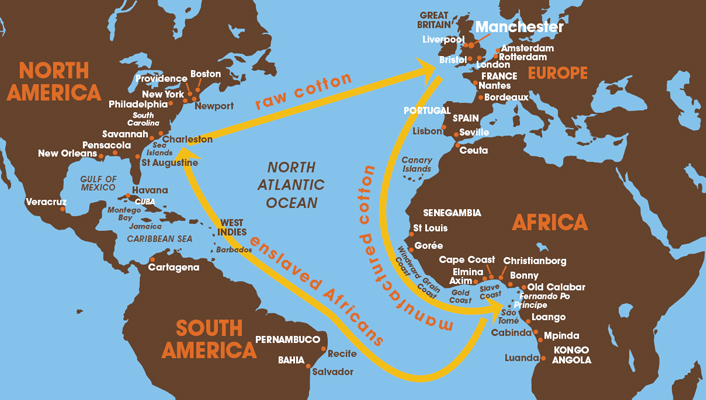
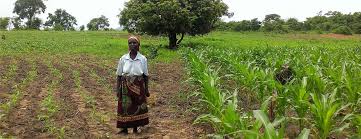
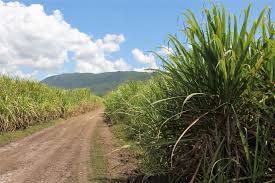
The geography of Africa was very important to the ancient Africans and their culture. Instruments like the Djembe, originated in the 11th century western Africa, was made out of goat skin and rawhide carved in a goblet shaped figure. The djembe was also an important part of culture as the instrument was used for story tellings and special occasions.A lot of the places in the Sahara have a lot of salt. Salt on the biggest ways to get the money in in ancient Africa especially places like Mali, Nigeria, and Libya. There are also two main seasons in the countries of Africa, rainy and dry. Sahel places are affected because their vegetation only grows in the rainy season, so the tribes in those areas are heavily limited to what they can eat due the geography. Food is also not the only aspect of culture that the vegetation and animals have though. In ancient African societies many people had positions. The positions were chosen by what they can do and who they are. Many people used to hunt for their food so the hunters lives were impacted by what animal they were trying to get. Farmers in villages had to know what plants to get, where they had to grow them, and when they have to grow them. Merchants were always in a hustle to get salt to make money for their communities. Ancient African societies depended heavily on geography, and without the geography to make their cultures, the culture all around the world would not be the same
Where African culture spread had a major impact on what the music was comprised of and how other cultures were impacted. One of the genres mentioned before, reggae, proves the point. They could not use their traditional drums so they improvised with steel plates. The Negro spirituals were made by the combinations of the local culture and the Africans. The music was not the only thing the geography impacted, location also impacted the culture. A lot of foods “African” foods in our western world are really different back in Africa. Pounded yam a food made from grinding and mashing the native African root yam, would taste a lot different. Since we do not have all the natural ingredients to these certain types of foods, we improvise, and sometimes when we improvise we do not get exactly what we want. The carnivals you sometimes see in South America have a lot of resemblance to African parades and celebrations. The similar drum sounds and patterns, the art and face painting all show these African roots and connections to the original culture. The spread of Traditional culture made a major impact around the world.
The geography was no doubt one of the biggest parts of how the culture spread. The Transatlantic slave trade sent Africans to many new places. The transportation via slave trade or just immigration was really important. They used their new resources that surrounded them, and their culture to make something new. You can even see how the geography in Africa made the traditional culture. You can see how over time the geography evolved and how they used new resources to add new aspects to their culture. The location of the people had an huge influence on culture over time.
Outro
The ancient Africans had a big influence on modern times. Their music to culture to their immigration took a huge toll on their impact. The use of their music was important to them, then they started using their culture, and used the resources around them to make special new cultures. The Transatlantic slave trade also was a major piece of their spread and evolution.The evolution is still going on too as so many Africans migrate to places like Europe and North America. The ancient Africans have, contributed a lot all around the world and modern times.
 Site Title